

GeneSmart and Thong Nhat Hospital Co-host Scientific Meeting on Pneumonia in Kidney Transplant Recipients
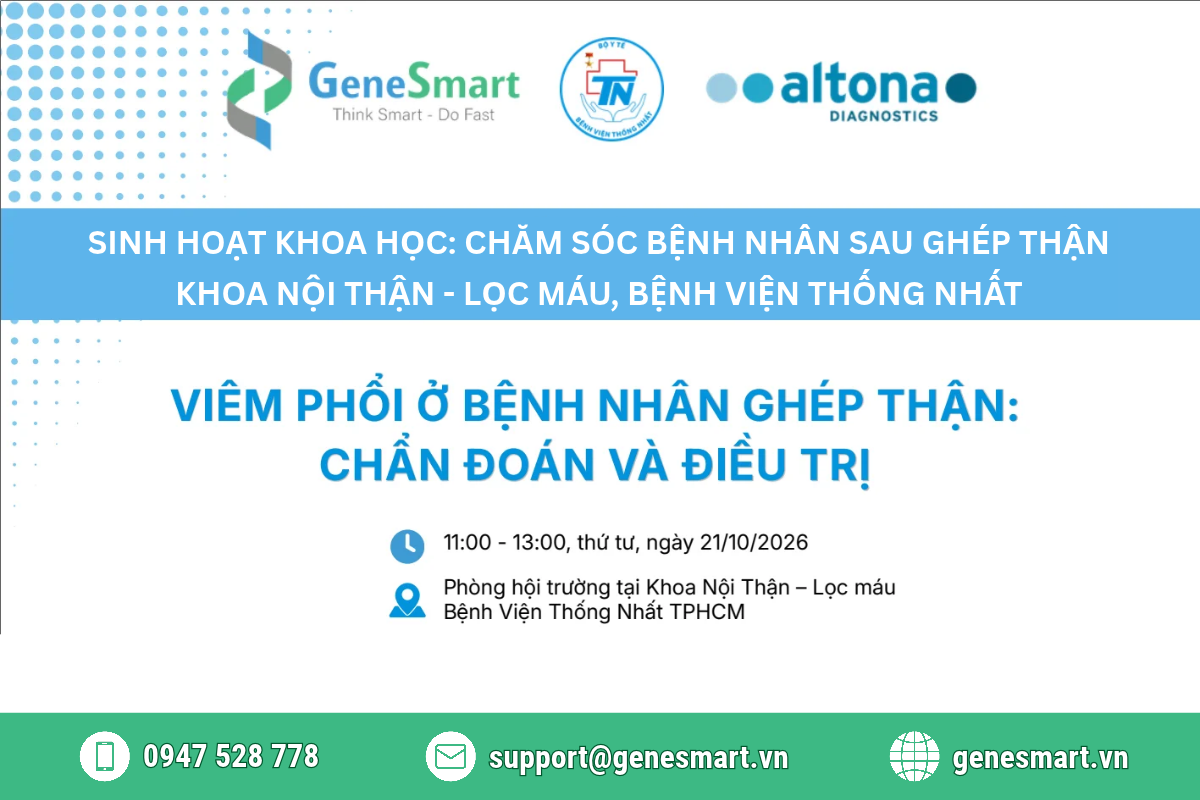
On October 21, 2026, GeneSmart Co., Ltd., in collaboration with the Department of Nephrology and Hemodialysis at Thong Nhat Hospital, Ho Chi Minh City, held a scientific meeting entitled “Pneumonia in Kidney Transplant Recipients: Diagnosis and Treatment.” The meeting addressed key clinical challenges and highlighted the role of microbiological and molecular diagnostics in the care of kidney transplant recipients.
Kidney transplant recipients are particularly vulnerable to infections because of the immunosuppressive therapy required to maintain graft function. Pneumonia remains a major concern in this population, as it may present with atypical symptoms, involve a broad spectrum of pathogens, and progress rapidly. These challenges underscore the importance of close collaboration between clinical specialists and diagnostic laboratories to support timely pathogen identification and appropriate treatment decisions.
Chaired by Associate Professor Nguyen Bach, MD, PhD, Head of the Department of Nephrology and Hemodialysis at Thong Nhat Hospital, the meeting featured three complementary perspectives: clinical management, microbiological laboratory capabilities, and advances in molecular diagnostics.
Clinical Insights from Cho Ray Hospital: A Comprehensive Approach to Diagnosis and Treatment
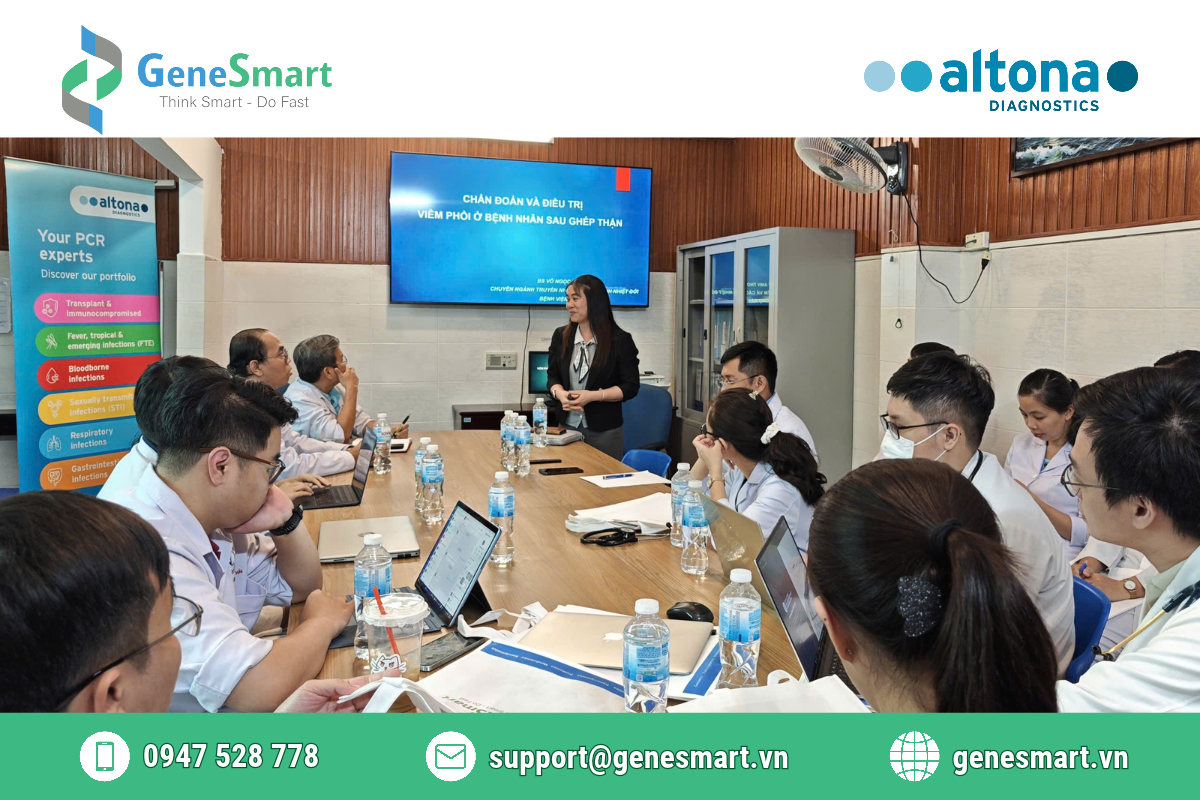
Opening the scientific session, Vo Ngoc Anh Tho, MD, MSc, Specialist Level II, an expert in infectious diseases and transplant-related infections at Cho Ray Hospital, one of southern Vietnam’s leading tertiary referral hospitals, presented “Diagnosis and Treatment of Pneumonia in Kidney Transplant Recipients.”
Drawing on complex clinical cases, Dr. Tho discussed the challenges of identifying causative pathogens, assessing disease severity, and selecting appropriate treatment regimens while managing potential drug interactions and preserving renal allograft function.
A central message was the critical importance of obtaining a thorough epidemiological and clinical history. Previous infections, exposure history, vaccination status, risk of latent tuberculosis, and the degree of immunosuppression can all provide valuable diagnostic clues, particularly given the wide range of opportunistic pathogens and emerging or re-emerging infectious diseases.
Dr. Tho also emphasized the role of multidisciplinary team (MDT) care in developing comprehensive management plans. Following multidisciplinary case discussions and agreement on a treatment strategy, the clinical team engages patients and their families in reviewing the proposed care plan, encouraging shared decision-making and coordinated care throughout treatment.
Vaccination before and after kidney transplantation was also discussed as an important consideration in long-term infection prevention. Vaccine selection and timing should be individualized according to each patient’s immune status and clinical circumstances.
Thong Nhat Hospital: Advancing Standardized Microbiological Testing and Diagnostic Capabilities
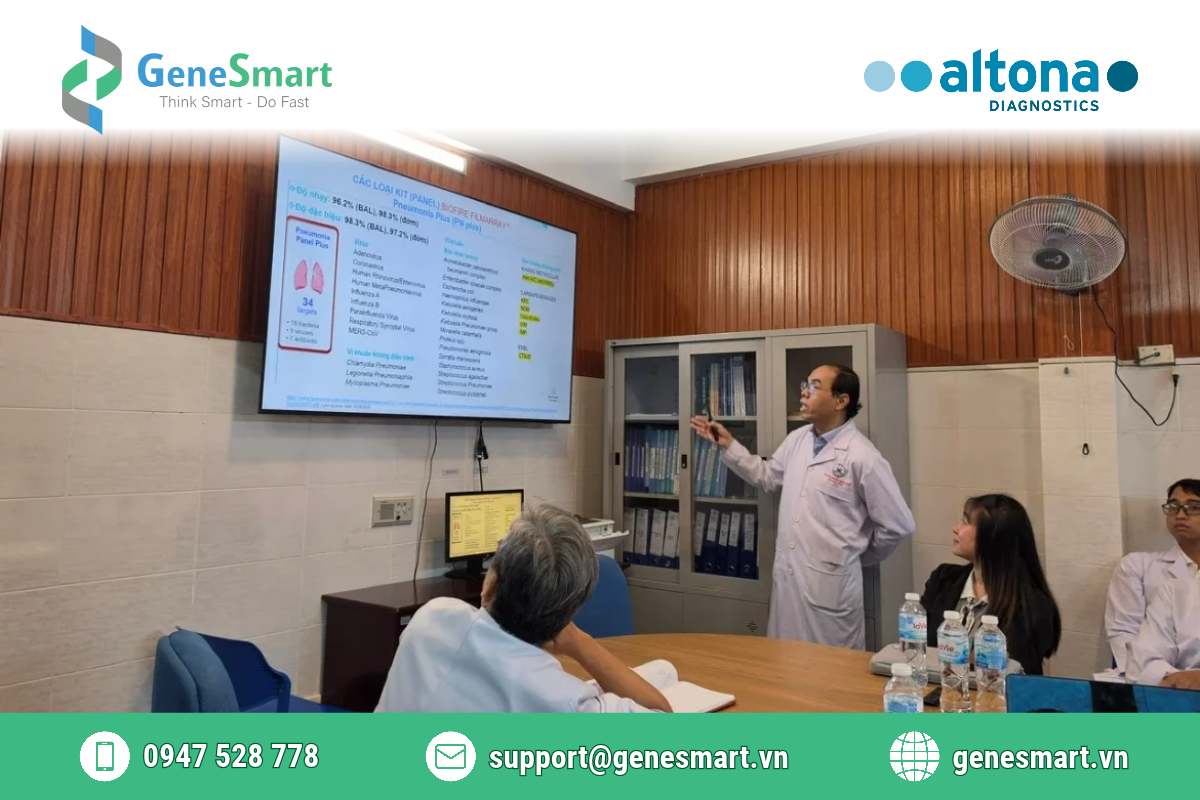
Continuing the program, Nguyen Ngoc Lan, MD, MSc, Head of the Microbiology Department at Thong Nhat Hospital, presented an overview of the laboratory methods currently used to support pneumonia diagnosis and guide antimicrobial therapy.
Of particular note, the Microbiology Department has adopted CLSI M39 guidance from the Clinical and Laboratory Standards Institute (CLSI) for the analysis and presentation of cumulative antimicrobial susceptibility data. This approach supports standardized antibiogram reporting, informs empirical antimicrobial selection, and contributes to antimicrobial stewardship.
Thong Nhat Hospital also employs a broad range of microbiological techniques, including microbial culture, antimicrobial susceptibility testing, matrix-assisted laser desorption/ionization time-of-flight mass spectrometry (MALDI-TOF MS) for microbial identification, rapid diagnostic assays, and molecular testing.
The expansion of nucleic acid amplification testing (NAAT) further strengthens the hospital’s ability to detect and monitor clinically significant viruses in transplant recipients, including Cytomegalovirus (CMV), Epstein–Barr virus (EBV), BK virus (BKV), JC virus (JCV), and Parvovirus B19.
As part of these ongoing efforts, Thong Nhat Hospital has been implementing the AltoStar® molecular diagnostic solution from altona Diagnostics, Germany. With more than 25 years of experience in molecular diagnostics, altona Diagnostics has participated in initiatives involving international organizations, including the WHO, CDC, and UNICEF. Its AltoStar® CMV assay has also been deployed at the provincial level in Canada and selected by a hospital in Belgium for inclusion in its ISO 15189 accreditation application scope.
Together, these developments reflect Thong Nhat Hospital’s continued efforts to standardize laboratory practices, expand diagnostic capabilities, and support the evolving clinical needs of patients.
GeneSmart: Optimizing Specimen Selection to Enhance the Clinical Value of Molecular Testing
Concluding the presentations, Nguyen Ngoc Quoc Bao, Product Specialist at GeneSmart, delivered a talk entitled “Molecular Diagnostic Solutions for Transplant Patient Management.” emphasizing the importance of selecting the appropriate specimen type for molecular testing.
Citing published studies, Mr. Bao highlighted how whole blood and plasma can yield substantially different results in CMV and EBV testing.
In a study by Rzepka et al. (2022), 37.8% of paired plasma samples tested negative for CMV DNA despite corresponding positive whole-blood results. Similarly, Lazzarotto et al. (2020) reported that only 11.5% of paired samples from kidney transplant recipients with EBV infection yielded quantifiable EBV DNA results in both whole blood and plasma.
These findings demonstrate that specimen selection can influence viral detection, viral load interpretation, and longitudinal monitoring. Selecting the appropriate specimen type for the clinical objective, while maintaining consistency throughout serial testing, is therefore essential for generating meaningful molecular diagnostic results that can inform patient management.
Connecting Clinical Expertise and Diagnostic Innovation to Improve Patient Care
From managing complex clinical cases to standardizing laboratory practices and implementing advanced molecular diagnostic technologies, the scientific meeting reinforced a shared message: effective diagnosis and management of pneumonia in kidney transplant recipients depend on close collaboration between clinical teams and diagnostic laboratories, with patient-centered care at the forefront.
GeneSmart extends its sincere appreciation to the Department of Nephrology and Hemodialysis at Thong Nhat Hospital, the invited speakers, and all participating physicians and healthcare professionals for their valuable contributions.
Through continued scientific exchange and collaboration, GeneSmart remains committed to connecting advances in laboratory diagnostics with real-world clinical needs, supporting healthcare institutions in their efforts to enhance diagnostic capabilities and improve patient care.
GENESMART CO., LTD.
Authorized distributor in Vietnam of 10x Genomics, altona Diagnostics, Biosigma, Hamilton Robotics, Hamilton Storage, Lexogen, IT-IS (Novacyt), Norgen Biotek, Novogene, Rainin, and Thermo Fisher Scientific.
Website: https://genesmart.vn
Hotline: +84 947 528 778
Email: info@genesmart.vn