

GeneSmart and Thong Nhat Hospital Host Scientific Conference on Spatial Biology in Cancer Research
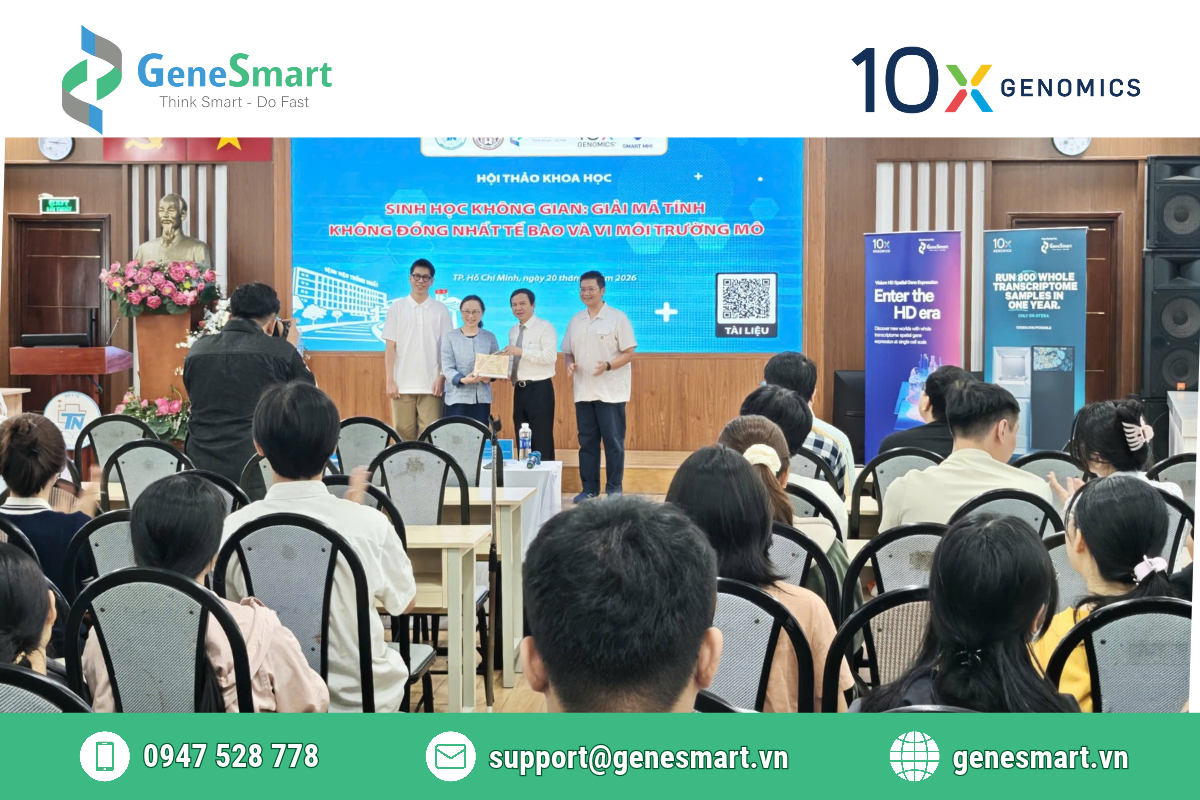
On September 20, 2026, GeneSmart Science and Technology Co., Ltd., in collaboration with Thong Nhat Hospital, organized a scientific conference titled “Spatial Biology: Decoding Cellular Heterogeneity and Tissue Microenvironments.”
Even within the same cancer type—or a single tumor—cells can exhibit remarkably different biological characteristics. More importantly, their spatial organization and interactions with neighboring cells may reveal critical insights into disease progression that conventional molecular profiling approaches cannot fully capture.
Through three scientific presentations covering ovarian and lung cancer research, the conference explored how understanding cellular organization and interactions within tissues is becoming increasingly important in precision oncology.
One Tumor, Multiple Molecular Identities
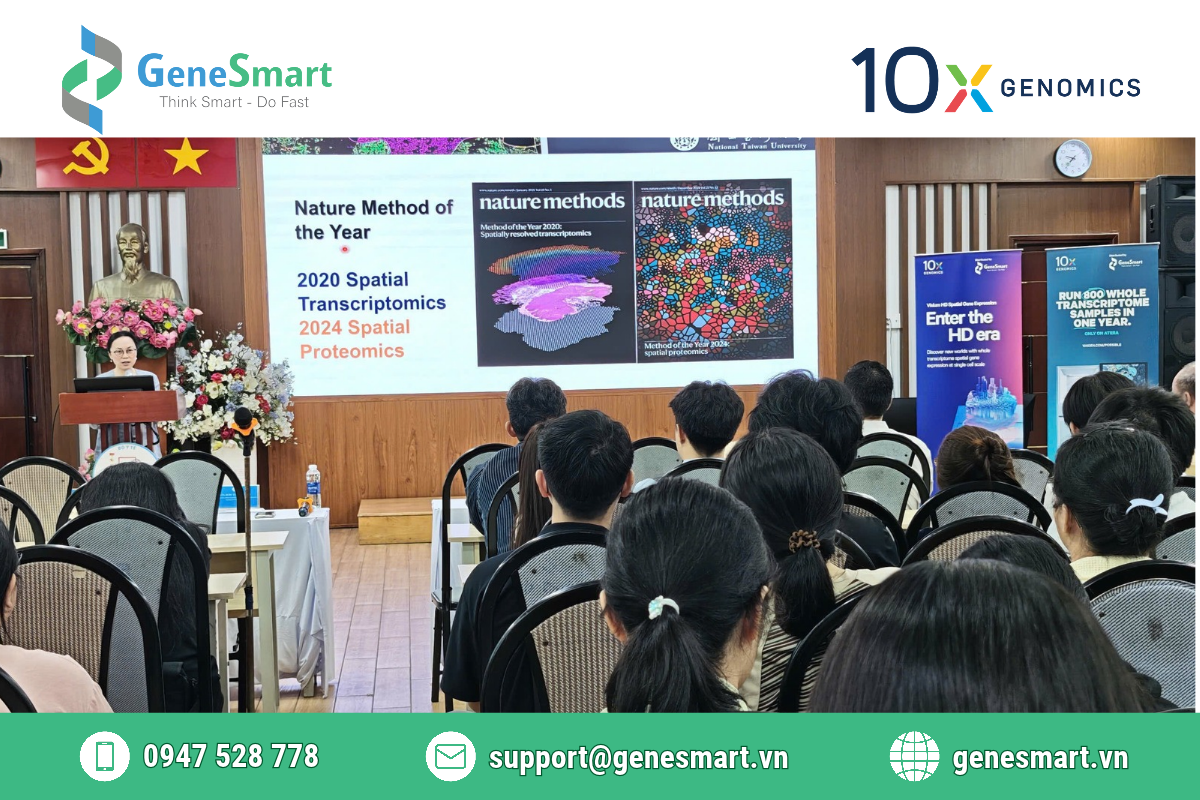
A highlight of the conference was the participation of Prof. Ruby Yun-Ju Huang, a researcher at National Taiwan University whose contributions to ovarian cancer research and tumor heterogeneity have been widely recognized.
In her presentation, “Know Thy Neighbour: Deconstructing Intra-tumor Heterogeneity.” Prof. Huang discussed research demonstrating that a single ovarian tumor can harbor multiple molecular subtypes, with their coexistence and composition associated with differences in patient prognosis.
These findings raise an important question: Could focusing solely on a tumor’s dominant molecular subtype cause us to overlook clinically relevant information?
Prof. Huang emphasized the importance of understanding the cellular “neighbors” within the tumor microenvironment and discussed the potential of spatial biomarkers to capture information beyond conventional molecular classification, ultimately supporting a more comprehensive understanding of prognosis and treatment response.
Can the Spatial Organization of Stromal Cells Help Predict Risk in Lung Cancer?
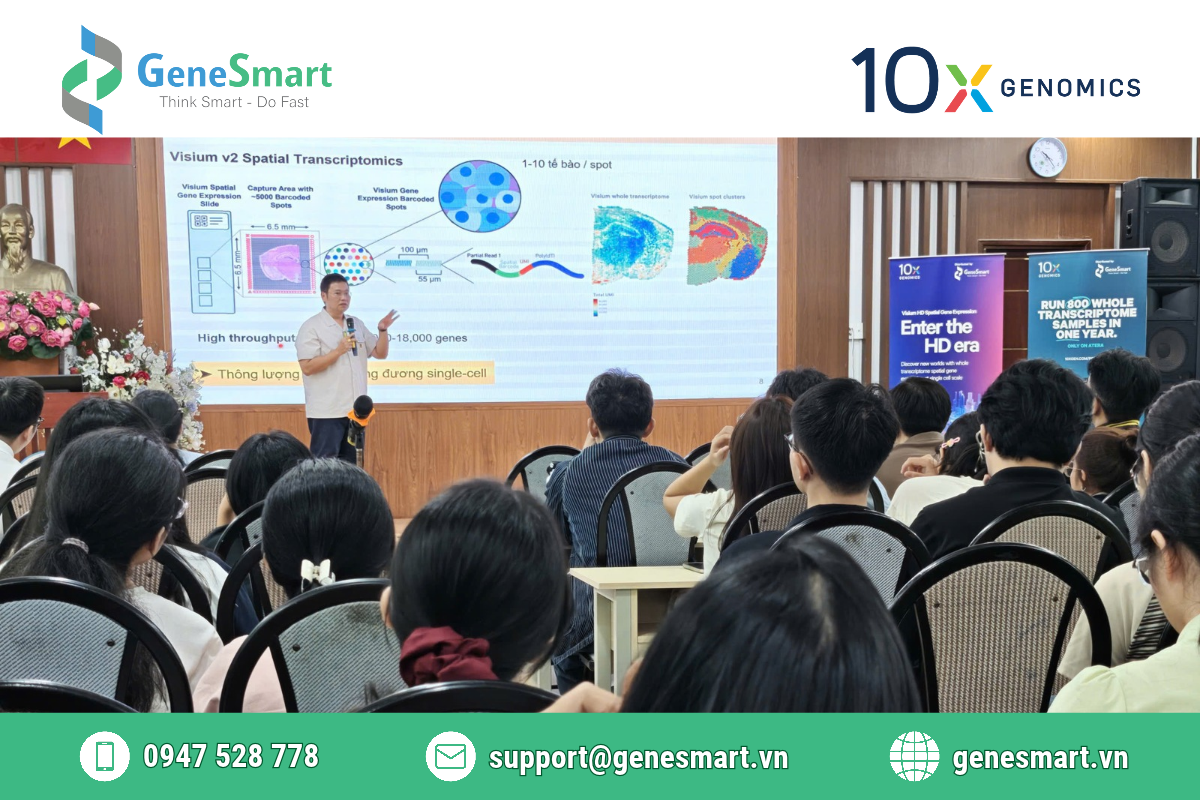
Dr. Luu Phuc Loi, Head of the Scientific Research Department at the Applied Research Institute for Health and Aging (ARiHA), Thong Nhat Hospital, delivered a presentation titled “Spatially Resolved Myofibroblast Niches: Leveraging Spatial Transcriptomics for Stromal Risk Stratification in NSCLC.”
His presentation focused on myofibroblasts within the tumor microenvironment of non-small cell lung cancer (NSCLC). Rather than examining cellular abundance alone, this research direction considers where myofibroblasts are located, how they organize into distinct stromal niches, and how these spatial patterns relate to tumor biology.
Using spatial transcriptomics, such tissue architectures can be investigated as potential sources of information for risk stratification. The approach also highlights the role of bioinformatics in translating complex molecular and spatial datasets into biologically meaningful insights with potential clinical relevance.
When Cancer Cells and Immune Cells Do Not Occupy the Same Space
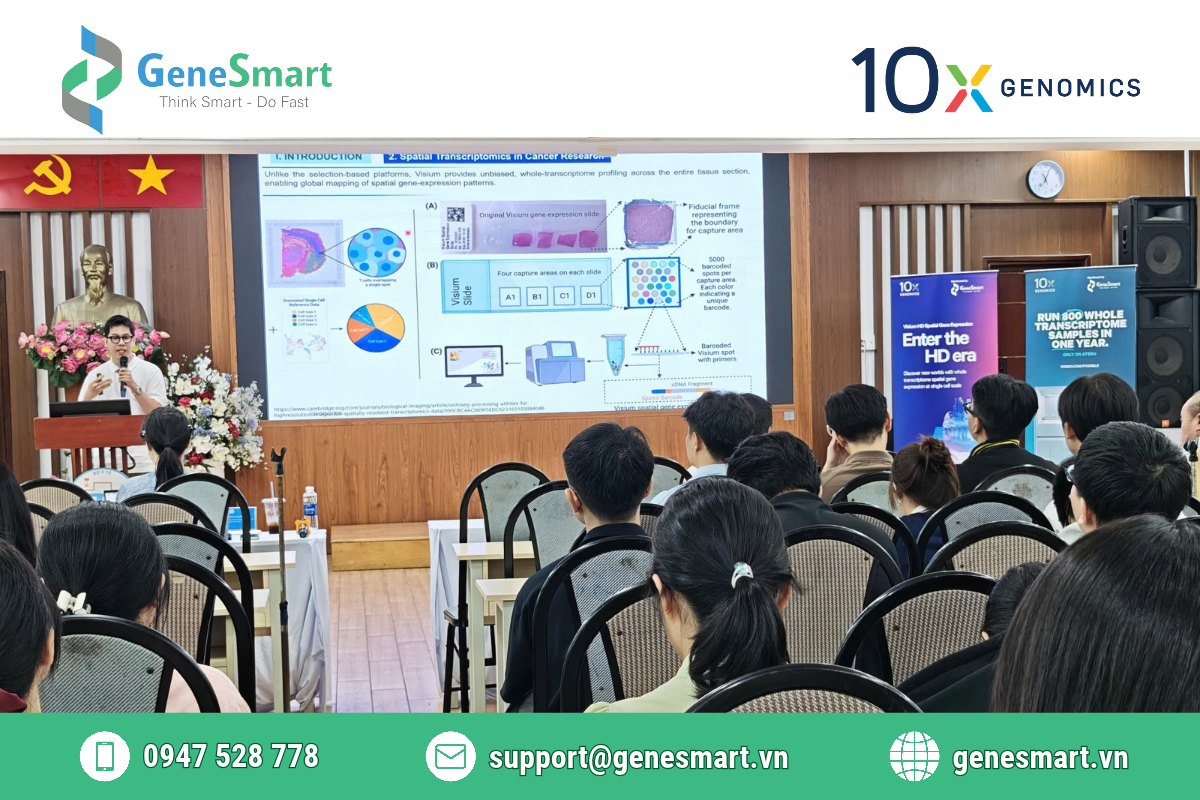
Le Truong Thang, a bioinformatics specialist and PhD candidate in the Genome and Systems Biology Program at National Taiwan University, presented “Mapping Spatial Niches Across Scales: From OCCC to Pan-Cancer Hypoxic Ecosystems.”
In a study of ovarian clear cell carcinoma (OCCC), spatial analyses revealed that certain cancer cell populations were spatially segregated from T cells. Meanwhile, hypoxia-associated and inflammation-associated cancer cells exhibited distinct spatial associations with other immune cell populations.
These findings suggest that the presence of immune cells within a tumor does not necessarily reflect their ability to interact with cancer cells. Their spatial distribution, proximity, and cellular interactions are also important considerations when investigating the tumor immune microenvironment.
Building on findings from OCCC, the research extends across multiple cancer types to investigate potentially conserved cellular ecosystems. This approach may help guide further studies of immune evasion, therapeutic resistance, and patient stratification.
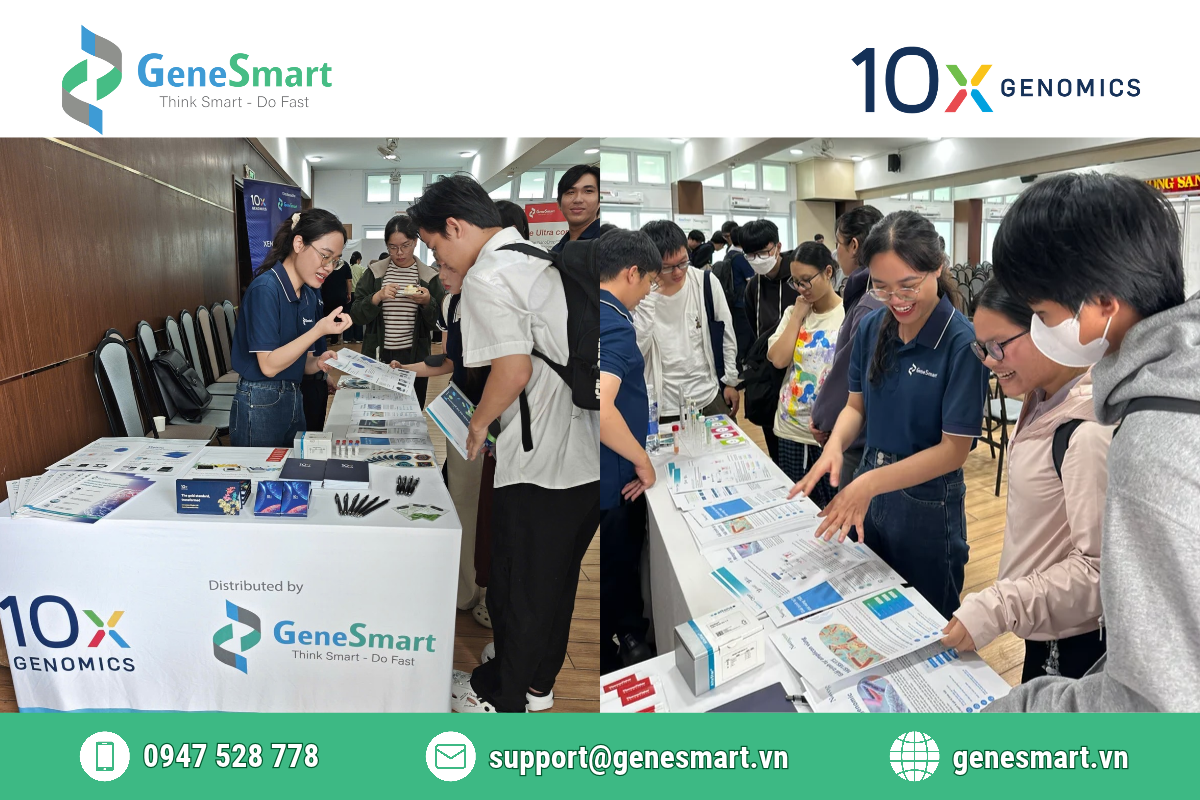
Beyond the scientific presentations, visitors also stopped by the GeneSmart exhibition booth to explore single-cell and spatial biology solutions from 10x Genomics. The booth provided an opportunity for clinicians and researchers to learn more about the technology platforms discussed during the conference and exchange ideas on their potential applications in ongoing and future research.
From Scientific Discoveries to Future Applications in Vietnam
Together, the three presentations highlighted biological information that may be overlooked when cells are studied in isolation: the coexistence of molecular tumor subtypes, the spatial architecture of stromal niches, and the distribution of immune cells within the tumor microenvironment.
The panel discussion on the future of spatial biology in Vietnam further addressed the importance of interdisciplinary collaboration, strengthening bioinformatics expertise, and validating the clinical relevance of spatially resolved findings.
Through this conference, GeneSmart and Thong Nhat Hospital helped connect Vietnamese researchers with international experts, fostering scientific exchange and discussions on emerging approaches in precision oncology.
Spatial biology is adding an important dimension to cancer research: understanding not only what defines a cell, but also where it is located, which cells surround it, and how these spatial relationships influence tumor biology.
————
GENESMART CO., LTD | Phân phối ủy quyền 10X Genomics, Altona, Biosigma, Hamilton, IT-IS (Novacyt), Norgen Biotek, Rainin tại Việt Nam.
Website: https://genesmart.vn/
Hotline: 0947 528 778
Email: info@genesmart.vn