

FLOQSwabs®: How Did a Seemingly Simple Swab Change Clinical Microbiology?
Handwashing was once considered an odd practice. Today, it is one of the most important foundations of modern infection prevention and control.
A bacterial culture plate that seemed ruined by mold contamination helped usher in the age of antibiotics.
A small seat belt in a car would later become one of the inventions credited with saving the most lives in the history of road transportation.
The history of science and technology has no shortage of turning points like these: a very small change to a detail that might seem insignificant can transform the way people live, receive medical care, and work.
The field of clinical microbiology testing has witnessed a turning point of its own.
For many years, swabs followed a familiar design: fibers wound around the tip. Improving them seemed to be simply a matter of choosing better fibers, making the tip softer, or improving sample collection.
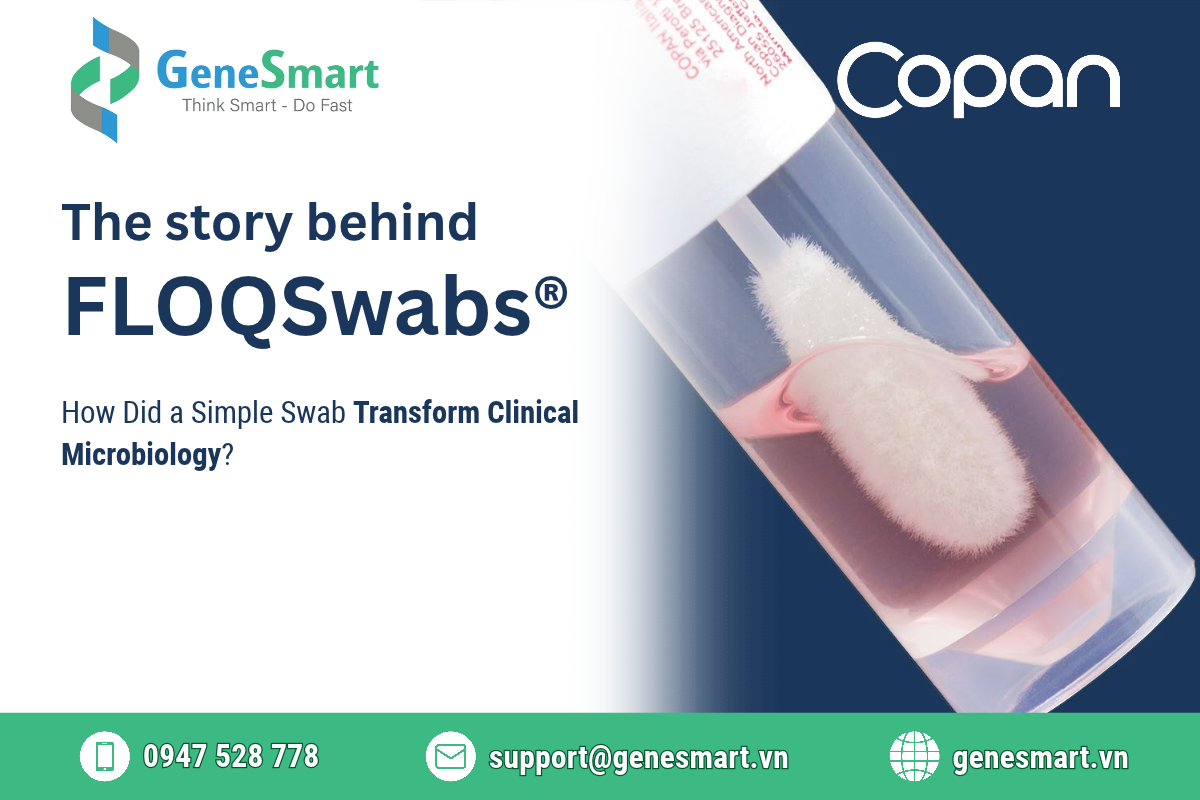
But the turning point came from a place seemingly unrelated to laboratory testing: a clothing store in Italy. The “velvet” on a clothes hanger prompted a new question: What if the fibers on a swab tip did not need to be wound around it at all [1][2]?
FROM AN IDEA TO THE BIRTH OF FLOQSwabs®
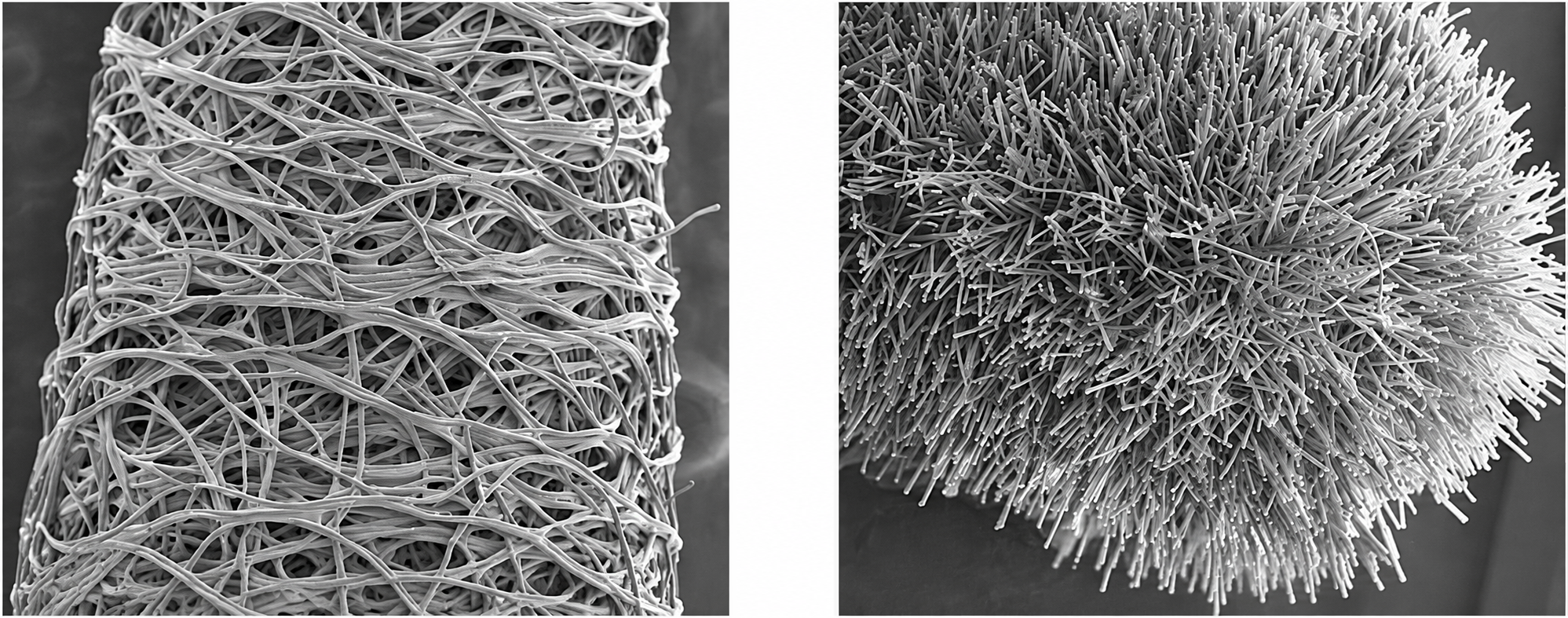
That question became more than an idea. Copan developed a completely different structure: very short nylon fibers applied evenly and upright across the swab tip using a flocking technique.
The result was a velvet-soft tip with thousands of tiny nylon fibers standing individually and pointing outward, rather than overlapping and tangling together. This type of device is known as a nylon flocked swab, or more simply a nylon swab or flocked swab.
Copan named this nylon swab FLOQSwabs® (Figure 1) [1] [2].
REMARKABLE RESULTS FROM SMALL CHANGES
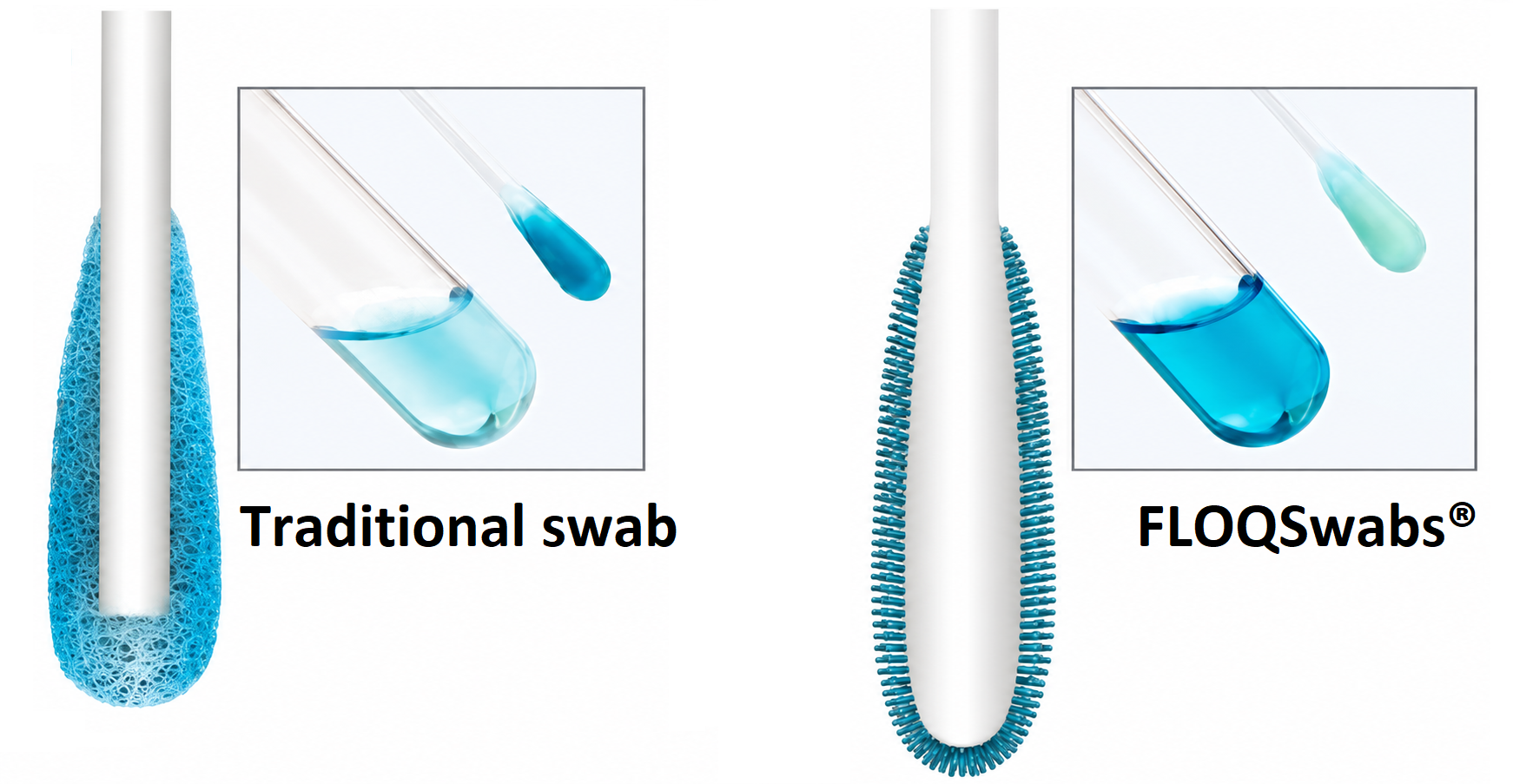
At first glance, the difference between the two swab designs seems to lie only in how the tiny fibers are arranged on their tips. But when both swabs are dipped into a colored solution and then placed into a transport-medium tube, the difference becomes clear: a traditional fiber-wound swab tends to retain liquid within its bundled fibers, while the nylon flocked structure of FLOQSwabs® allows the sample to be released more readily (Figure 2).
In other words, getting a specimen onto the swab tip is not the whole story. What matters is how much of that specimen is then actually released into the transport medium and goes on to be tested.
1/ Daley et al. (2006) [3]
The researchers compared the collection of respiratory epithelial cells using nylon flocked swabs and rayon swabs in 16 healthy volunteers (paired sampling) and 61 symptomatic patients (sampled with one of the two swab types).
The results showed that nylon flocked swabs collected substantially more epithelial cells: among healthy volunteers, 58.6 vs. 23.9 cells per microscopic field in nasopharyngeal samples (P = 0.02); and among symptomatic patients, 67.2 vs. 29.3 cells per field (P < 0.001).
2/ Chernesky et al. (2006) [4]
The researchers compared the detection of Chlamydia trachomatis (CT) and Neisseria gonorrhoeae (NG) using nylon flocked swabs with universal transport medium (UTM) versus the collection devices supplied with three testing platforms: APTIMA Combo 2, Roche Amplicor, and BD ProbeTec ET. The study used simulated CT and NG specimen dilution series from 10⁻¹ to 10⁻¹⁰, with 10 tests at each dilution level.
Nylon flocked swabs tended to produce higher positive detection rates for low-concentration CT and NG samples across all three platforms. The most striking result was for CT on APTIMA Combo 2 (62.5% vs. 32.5%; P < 0.001).
3/ Abu-Diab et al. (2008) [5]
The researchers compared the detection of respiratory viruses using deep nasal sampling with nylon flocked swabs and UTM versus nasopharyngeal aspirates (NPA) in 455 children under five who were hospitalized with respiratory illness. Each child underwent both sampling methods. Respiratory syncytial virus (RSV), influenza A, parainfluenza virus (PIV), and adenovirus were tested by direct fluorescent antibody testing (DFA); discordant results were checked using real-time PCR.
The nylon flocked swabs achieved 98.5% sensitivity and 100% specificity. Among 455 paired specimens, only five cases had a positive NPA result but a negative or inadequate nylon-swab result. The difference in virus detection between the methods was not statistically significant (P = 0.0625). These findings suggest that nylon flocked swabs could replace NPA through a simpler, less invasive collection procedure.
4/ Walsh et al. (2008) [6]
The researchers compared PCR-based respiratory virus detection using three collection methods in 181 infants and toddlers: nylon flocked swabs with UTM, nasal aspirates mixed with UTM, and nasal aspirates without added UTM. The viruses studied included RSV-A, RSV-B, influenza A, influenza B, and human metapneumovirus (hMPV).
Nylon flocked swabs with UTM yielded the highest virus detection rate (45.3%), compared with nasal aspirates with UTM (42.5%; P = 0.312) and nasal aspirates without UTM (35.4%; P = 0.016). However, only the difference versus nasal aspirates without UTM was statistically significant.
5/ Verhoeven et al. (2010) [7]
The researchers compared the recovery and detection of Staphylococcus aureus (S. aureus) using nylon flocked swabs and rayon swabs. Over five weeks, they obtained 628 paired samples from 90 healthy healthcare workers and plated the specimens directly onto CHROMagar™ without an enrichment step.
Nylon flocked swabs recovered approximately 7.5 times more S. aureus on average (3.41 × 10⁶ vs. 4.53 × 10⁵ CFU/mL; P = 0.004) and provided higher sensitivity for detecting S. aureus carriage (97.1% vs. 74.3%; P = 0.026).
6/ Munywoki et al. (2011) [8]
The researchers compared respiratory virus detection using nasopharyngeal nylon flocked swabs versus nasal washes in 299 pediatric outpatients with acute respiratory illness. Every child was sampled using both methods, and multiplex real-time PCR was used to detect 16 respiratory pathogens. RSV was also evaluated using immunofluorescence.
Nylon flocked swabs demonstrated significantly higher sensitivity than nasal washes (89.6% vs. 79.2%; P = 0.0043), particularly for rhinovirus and adenovirus. The proportion of children in whom at least one virus was detected was also higher (62.5% vs. 56.5%; P = 0.008).
7/ Zasada et al. (2020) [9]
The researchers compared water absorption and DNA recovery across four swab types: nylon flocked, rayon, Dacron, and polyurethane foam. Each swab type underwent five water-absorption tests. DNA recovery was assessed using bacterial samples in combination with nine different sample-elution solutions.
Nylon flocked swabs had the highest mean absorption volume (142 µL), compared with rayon (90 µL), Dacron (103 µL), and polyurethane foam (57 µL) (P = 0.0006). They also produced the highest DNA recovery (6.3 ng/mL), approximately 3.5 times that of rayon (1.8 ng/mL), 2.3 times Dacron (2.8 ng/mL), and 1.5 times polyurethane foam (4.2 ng/mL) (P < 0.001).
FROM INDUSTRY-WIDE ADOPTION
In the medical device industry, global corporations have seemingly limitless R&D resources and supply networks. Their default response to any consumable is to develop and manufacture it themselves, keeping their ecosystems integrated and optimizing profit margins.
Yet nylon flocked swabs created a rare exception: some of the world’s leading diagnostic giants opened their product portfolios to partnerships and distribution of Copan’s technology rather than develop a competing product themselves.
That recognition is reflected directly in technical records and agreements across the biomedical industry.
Becton Dickinson (BD) [10]
One of the longest-established names in microbiology, BD pursued a strategic OEM partnership to bring nylon flocked swabs into its BD Flocked Swabs and BD ESwab™ product portfolios.
The connection is documented in a 2021 medical device record from the U.S. Food and Drug Administration (FDA), which directly matches BD product codes with configurations manufactured by Copan.
- BD 220250 corresponds to Copan 519CS01.BD
- BD 220251 corresponds to Copan 518CS01.BD
- BD 220252 corresponds to Copan 503CS01.BD
Cepheid [11]
The renowned maker of the GeneXpert® PCR testing system understands that even the most advanced analyzer is of little use if the specimen is lost before analysis.
In the instructions for Cepheid’s nasopharyngeal sample collection kit, the manufacturing relationship is stated plainly: “Manufactured for Cepheid by Copan.”
bioMérieux [12]
As early as 2007, this French industry giant signed an exclusive worldwide distribution agreement for Copan’s nylon flocked swabs in pharmaceutical cleanroom environmental microbiological monitoring.
In clinical diagnostics, bioMérieux also integrated FLOQSwabs® solutions to standardize specimen input for microbial identification testing.
Other major companies
Alongside these direct manufacturing and distribution agreements, major names such as Roche, Hologic, QIAGEN, and Seegene have also validated the clinical compatibility of Copan’s nylon flocked swabs and liquid transport media. Although compatibility does not mean an OEM agreement, it reflects a broader reality: across the modern diagnostic ecosystem, nylon flocked swabs have implicitly come to be viewed as an ideal standard for specimen collection.
TO CLINICAL GUIDELINE RECOMMENDATIONS
Adoption by major diagnostic companies brought nylon flocked swabs into a wide range of testing platforms. Yet the decisive step in turning a materials innovation into a standard of clinical practice came through formal medical guidance.
In fact, a global shift took place as leading microbiology bodies and health authorities in the United States and United Kingdom formally incorporated nylon flocked swabs into technical guidance.
From the preanalytical principles of IDSA–ASM in the United States to NHS microbiology manuals in the United Kingdom, nylon flocked swabs were no longer merely an optional experiment. Their inclusion represented the highest level of professional recognition: the quality of a medical diagnosis must be safeguarded from the very first tool that comes into contact with the specimen.
United States (IDSA–ASM 2024) [13]
In their joint guide to the use of the microbiology laboratory, the Infectious Diseases Society of America (IDSA) and the American Society for Microbiology (ASM) explicitly describe nylon flocked swabs as superior to traditional Dacron, rayon, and cotton swabs because they release specimens more efficiently.
In their general specimen collection guidance, IDSA and ASM formally recommend giving preference to flocked swabs over spun swabs for aerobic bacterial, anaerobic bacterial, and viral cultures.
United Kingdom (NHS)
In the United Kingdom, nylon flocked swab technology has been incorporated into specimen collection procedures at numerous facilities within the National Health Service (NHS).
Notably, an NHS microbiology manual warns that using a traditional bound swab instead of a flocked swab may reduce PCR sensitivity, especially for specimens with low viral loads. In such cases, the laboratory advises considering repeat specimen collection using a flocked swab or consulting a virologist [16].
Nylon flocked swabs also appear in specimen collection guidance for Chlamydia trachomatis testing issued by York and Scarborough Teaching Hospitals NHS Foundation Trust [14], and for adenovirus PCR testing on conjunctival specimens at North Bristol NHS Trust [15].
WHEN A SMALL DETAIL RESHAPES THE STANDARDS OF DIAGNOSIS
Looking back, the story of nylon flocked swabs has all the hallmarks of those familiar historic turning points. Just like handwashing or the seat belt, an observation made outside the laboratory sparked a fundamental change across the biomedical field.
For decades, modern medicine has raced to develop more sensitive, more sophisticated analyzers and increasingly large automated systems. Yet amid all that technological progress lies a paradox: much of a precious clinical specimen may remain trapped inside the fiber bundle of a traditional swab before it ever reaches the analytical reaction.
By replacing tangled, overlapping wound fibers with short, upright nylon fibers, FLOQSwabs® released clinical specimens from that mechanical trap.
From superior sample recovery documented in numerous independent clinical studies, through adoption by multinational diagnostic companies in their supply chains, to formal standardization in practice guidance from IDSA–ASM and international healthcare organizations, this journey affirms one essential principle:
The reliability of a test result does not begin when a specimen enters the analytical system; it is determined from the very moment the swab touches the collection site.
In the era of precision medicine, as analytical techniques move ever closer to the limits of detection, the quality of the incoming specimen is one link in the chain that must never be overlooked. After all, even the most advanced testing system can analyze only what has actually been collected and delivered to the laboratory.
Sometimes, the greatest advance in diagnostics does not lie in creating yet another expensive, state-of-the-art system, but in deciding to change one small tool at the very beginning of the process.
REFERENCES
[1] Tognini G (2022). Forbes. Meet the family-owned company that invented swabs for Covid tests.
[2] Copan (n.d.). FLOQ® technology.
[3] Daley P et al (2006). J Clin Microbiol. Comparison of flocked and rayon swabs for collection of respiratory epithelial cells from uninfected volunteers and symptomatic patients.
[4] Chernesky M et al (2006). J Clin Microbiol. Use of flocked swabs and a universal transport medium to enhance molecular detection of Chlamydia trachomatis and Neisseria gonorrhoeae.
[5] Abu-Diab A et al. (2008). J Clin Microbiol. Comparison between pernasal flocked swabs and nasopharyngeal aspirates for detection of common respiratory viruses in samples from children.
[6] Walsh P et al. (2008). J Clin Microbiol. Comparison of respiratory virus detection rates for infants and toddlers by use of flocked swabs, saline aspirates, and saline aspirates mixed in universal transport medium for room temperature storage and shipping.
[7] Verhoeven P et al (2010). J Clin Microbiol. Better detection of Staphylococcus aureus nasal carriage by use of nylon flocked swabs.
[8] Munywoki PK et al. (2011). J Clin Microbiol. Improved detection of respiratory viruses in pediatric outpatients with acute respiratory illness by real-time PCR using nasopharyngeal flocked swabs.
[9] Zasada AA et al. (2020). AMB Express. The influence of a swab type on the results of point-of-care tests.
[10] U.S. FDA (2021). Class 2 Device Recall – FLOQSwab. Recall No. Z-2440-2021.
[11] Cepheid (2020). Xpert® Nasopharyngeal Sample Collection Kit (for viruses): Instructions for use. Document No. 301-3234, Rev. G.
[12] Copan, bioMérieux (2007). Copan and bioMérieux sign exclusive worldwide distribution agreement.
[13] Miller JM et al. (2024). Clin Infect Dis. Guide to utilization of the microbiology laboratory for diagnosis of infectious diseases: 2024 update by IDSA and ASM.
[14] York and Scarborough Teaching Hospitals NHS Foundation Trust (2020). NHS. Chlamydia collection information.
[15] North Bristol NHS Trust (n.d.). NHS. Adenovirus (qualitative) PCR (in house).
[16] East Suffolk and North Essex NHS Foundation Trust (2023). NHS. Microbiology user manual (MM-ALL-INFO-33, version 1.0), p. 14, §12.2 Molecular.
------------
GENESMART CO., LTD | Phân phối ủy quyền 10X Genomics, Altona, Biosigma, Hamilton, IT-IS (Novacyt), Norgen Biotek, Rainin tại Việt Nam.